Showing posts with label Festival Importance. Show all posts

Sunday, 1 December 2013

beejakshara mantra RAMA NAVAMI - IMPORTANCE OF FESTIVAL - Short Story Watch

Sri Rama Navami is the birth anniversary of Sri Rama celebrated by devotees all over the world. It falls on the ninth day of the bright fortnight when the asterism Punavasu(Geminorum) is in the ascendancy. The observance of this Vrata (Continuous Prayers till the day ends)  is said to absolve one from all sins. Men of all grades and ranks observe this Vrata for obtaining prosperity, longevity, happiness and wisdom.

The Lord Mahavishnu, one of the Hindu Trinity, representing the preservative aspect of the universe as in his previous incarnations (avatars), descended into the world to kill the ten-headed Asura named Ravana who was an epitome of the ten ahamkaras (egoism) of men. When one is under the sway of the ahamkaras, the power of discrimination between right and wrong is destroyed. Consequently the Lord's light has to descend on him to destroy these ahamkaras.

During Rama Navami Hanuman is worshipped for his unflinching devotion to Rama, and his worship forms an important part of the Rama Navami celebrations. 

Rama Navami - Festival Importance - Ramas Story in Video watch it.


Gsv Pics | Gsv Vids | Techno zip | Divine-Thought | For The Sake of Us | Gsv Films

beejakshara mantra Ganapathi Saranam -Ganesh Bhajans

Ganesh puja - Ganesh Prayers, 

Ganesh bhajans.Ganesh Wallpapers Download


Ganesha Chaturthi, the great Ganesha festival, also known as 'Vinayak Chaturthi' or 'Vinayaka Chavithi' is celebrated by Hindus around the world as the birthday of Lord Ganesha. It is observed during the Hindu month of Bhadra (mid-August to mid-September) and the grandest and most elaborate of them, especially in the western India state of Maharashtra, lasts for 10 days, ending on the day of 'Ananta Chaturdashi'.

Om Gam Ganapataye Namaha
Om Sri Vinayakaya Namaha
 Om Sri Pramukaya Namaha
Om Sri Sumukaya Namaha
Om Parvati Nandanaya Namaha
Om Pancha Hastaya Namaha
Om Papanashanaya
 Namaha Telugu
Vinayaka Bhajans Ganapathi Saranam


 Ganesha Saranam Video - Ganesh Popular Bhajans


Vinayaka Chavithi -Ganesh Chathurthi , Ganesh Wallpapers,
Gsv Pics |Gsv Vids | Techno zip| Divine Thought | For The Sake of Us | Gsv Films

Thursday, 28 November 2013

beejakshara mantra Dont Forget to Offer these 7 Things to SAIBABA


 According to scriptures (SaiSath Charitra) and books, written by the elders(Gurus), who have intimate relationship with  SHIRIDI SAIBABA, has given a 7 things list to offer to SAIBABA with intense love on him and show the same respect towards to all the living and non-living organisms.

 Thursday is associated with Sai Baba. It is believed that prayers and Bhajans should be conducted on this day, to appease him. This helps us to get rid of all the problems in life.
But, before offering anything to Sai Baba one should know what to offer, and the same should be taken after the puja and Bhajan as SAI PRASADAM.

 SWEETS 

1.  Sweets are a very important part of prayers. Hence, devotees offer sweets like DudhPeda,
     Palakova and others which are mixed with Milk and Sugar.

FRUITS

2.  Fruits: Fruits can also be offered to Sai Baba.

HALWA

3. Halwa : Offer Halwa to Sairam.

KHICHIDI 


4. Khichdi: Offer khichdi as it is believed to be his favourite dish

COCONUTS

5. Coconut: Coconut is offered in all important rituals. Hence, it should be offer to Sai Baba

VEGETABLE LEAFS 

6. Spinach curry: It is believed that Sai Baba liked spinach curry. That is why some devotees offer this.

FLOWERS -GARLANDS

7. Flowers: Devotees can also offer garlands to Sai Baba


Gsv Pics |Gsv Vids | Techno zip| Divine Thought | For The Sake of Us | Gsv Films

Wednesday, 27 November 2013

beejakshara mantra Importance of Festival of Vaikunta Ekadasi


Vaikunta Ekadasi is an important festival dedicated to Lord Vishnu in the Tamil month of Margazhi (December-January)/ Pushyam month in Telugu. Vaikunda Ekadesi festival is of great significance at the Tirupati Balaji Temple, Srirangam Sri Ranganatha Temple and at the Bhadrachalam Temple. In Kerala, it is known as Swarga Vathil Ekadashi. Next Vaikunta Ekadasi date is on December 28, 2009. Please note that there is no Vaikunta Ekadasi in 2010.

The significance of Vaikunta Ekadasi can be traced back to the Padma Purana. The Purana indicates that Lord Vishnu took the form of ‘Ekadasi’ – female energy – to kill demon Muran. This happened during the month of Margazhi. Impressed by ‘Ekadasi,’ Lord Vishnu told her that whoever worships him on this day will reach ‘Vaikunta’ (heaven).

Like all Ekadasi days, devotees fast on this day and observe vigil the whole night. Some people indulge in meditation, Japa and singing of Hari Kirtan. Rice is avoided during ekadashi days as it is believed that the demon Mura finds a dwelling in the rice eaten on Ekadasi day.

It is widely believed that the gates to the heaven open - the Gate of Vaikuntha - on the Vaikunta Ekadasi day. It is one of the most auspicious days in Lord Vishnu Temples in South India.

The ‘Vaikunta Dwaram’ or ‘the gate to the heaven’ is opened on this day. This is the passage encircling the innermost sanctum of the Lord. Scores of devotees queue up to pass through the Gate of Vaikunta in the temples.

Vaikunta Ekadasi occurs in December or early January.

beejakshara mantra VARALAKSHMI-PUJA-INFO-IMPORTANCE-STORY

Varalakshmi Vratam  When and How

 Varalakshmi Vratam is an important pooja performed by many women in the month of Sravanamasam / Aavani. In this month many women perform Mangalagouri vratam on Tuesdays and Mahalakshmi puja on Fridays.

VaraLakshmi Vratham is performed on The 2nd firday of Sravana maasa or the firday before full moon day (Pournami).It is believed that worship of Goddess Lakshmi on this day will bring health, wealth and prosperity. Vara means boon. Needless to say, performing puja (in the form of a Vratam) to Goddess Varalakshmi will bring in boons to those who performs with utmost devotion.

Those who fail to perform the Vratam can do it so on any other Friday of the Sravanamasam. Eight forces or energies are recognised and they are known as Sri (Wealth), Bhu (Earth), Sarasvati (learning), Priti (love), Kirti (Fame), Santi (Peace), Tushti(Pleasure) and Pushti(Strength).

Each one of these forces is called a Lakshmi and all the eight forces are called the Ashta Lakshmis or the eight Lakshmis of the Hindus. Vishnu is also called Ashta Lakshmi Padhi which is equivalent to saying that he is the asylum for the eight-Lakshmis or forces. Lakshmi is a woman. So she will more readily sympathise with women.

Hence this varalakshmi Vratam is performed by women invoking the blessings of Lakshmi on their family and bless them with health, wealth and prosperity. Preparation of Varalakshmi Vratham : Goddess Lakshmi loves cleaner and tidier homes.

Hence,the pooja room and the house is cleaned on previous day itself. Puja related vessels are cleaned and polished. On the Puja day Women woke up early morning clean the pooja room and make kolam (rangoli) with rice flour. Keep a flat wooden platform/ plate spread a blouse piece over it. Over the blouse piece spread a cup of rice .

Place a cloth and spread some raw rice on it and place kalash on it. The Kalash is half-filled with water and decorated with betelleaves, usually five in number.The Kalash tray can be filled with turmeric, kumkum, sandalwood and other Pooja items..

The coconut is applied with turmeric and is richly decorated with kumkum. Now close it with with coconut with red cloth folded like pyramid,(look like a cap). The features of the Goddess are also drawn on the coconut to make the image of Her to facilitate worship. Jewellery is put round the coconut. Decorate and place some flowers.


Story of SRI VARAMAHALAKSHMI

The story happens in a beautiful town called Kundinagaram located in the Kingdom of Vidarbha (Vidarba Rajyam). In that Kundinagram town, Goddess Adilakshmi, being pleased by her devotion tells Charumathi in a dream and directed her to perform the vrata to enable Her to fulfil her desires. Charumathi wakes up and tells her husband about the dream. Charumathi along with some neighbourhood women takes bath in the wee hours and prepare a mandapam and invites Varalakshmi Devi. She recites the following sloka along with other women with utmost faith and devotion.

Sri Maha Lakshmi Stotram

Lakshmi Ksheerasamudra rajatanyam sri rangadhameswareem
Dasibootha samastha devavanitham lokaika deepamkuram
Sri manmanda kataksha labdhivibhat brahmendra gangadharam
Twamtrayamlokyakutumbhineem sasijavandemukunda priyam

Then she wore nine threads Thoranam( A band with yellow thread) to right hand and offers naivadyam to Goddess Lakshmi Devi. On the completion of the first circumstance, she heard she found Gajjelu, Andelu and other ornaments. On the second circumstance, they found kankanams made of navaratnams to their hands. On completion of the third circumstance, they found immense wealth. Then Charumathi offers Tambulam to the brahmin priests and distribute the vrata prasadam to the relatives and lead a happy life. Since then, Hindu women perform this vrata with utmost faith and trust till today. With this, Lord Eswara concludes telling the story to Goddess Parvathi.

Gsv Pics |Gsv Vids | Techno zip| Divine Thought | For The Sake of Us | Gsv Films

beejakshara mantra Meditation on BHAGHAVAD GEETHA- Prayer

GITA DHYANAM MEDITATION ON THE GITA

ORIGIN OF MEDITATION MANTRA RIGHT FROM STARTING THE WORLD.

Om paarthaaya pratibodhitaam bhagavataa naaraayanenaswayam,

Vyaasena grathitaam puraanamuninaa madhye mahaabhaaratam;

Advaitaamritavarshineem bhagavateem ashtaadashaa dhyaayineem,

Amba twaam anusandadhaami bhagavadgeete bhavadweshineem.


1. Om. O Bhagavad Gita, with which Partha was illumined by Lord Narayana Himself, and
which was composed within the Mahabharata by the ancient sage, Vyasa, O Divine Mother, the
destroyer of rebirth, the showerer of the nectar of Advaita, and consisting of eighteen
discourses—upon Thee, O Gita, O affectionate Mother, I meditate!

Namostu te vyaasa vishaalabuddhe phullaaravindaayatapatranetra;


Yena twayaa bhaaratatailapoornah prajwaalito jnaanamayah pradeepah.


2. Salutations unto thee, O Vyasa, of broad intellect and with eyes like the petals of a
full-blown lotus, by whom the lamp of knowledge, filled with the oil of the Mahabharata, has been
lighted!

Prapannapaarijaataaya totravetraikapaanaye;

Jnaanamudraaya krishnaaya geetaamritaduhe namah.


3. Salutations to Lord Krishna, the Parijata or the Kalpataru or the bestower of all desires for
those who take refuge in Him, the holder of the whip in one hand, the holder of the symbol of divine
knowledge and the milker of the divine nectar of the Bhagavad Gita!

Sarvopanishado gaavo dogdhaa gopaalanandanah;

Paartho vatsah sudheer bhoktaa dugdham geetaamritam mahat.


4. All the Upanishads are the cows; the milker is Krishna; the cowherd boy, Partha
(Arjuna), is the calf; men of purified intellect are the drinkers; the milk is the great nectar of the
Gita.

Vasudevasutam devam kamsachaanooramardanam;

Devakeeparamaanandam krishnam vande jagadgurum.


5. I salute Sri Krishna, the world-teacher, son of Vasudeva, the destroyer of Kamsa and
Chanura, the supreme bliss of Devaki!

Bheeshmadronatataa jayadrathajalaa gaandhaaraneelotpalaa;

Shalyagraahavatee kripena vahanee karnena velaakulaa;

Ashwatthaama-vikarna-ghora-makaraa duryodhanaavartinee;

Sotteernaa khalu paandavai rananadee kaivartakah keshavah.


6. With Kesava as the helmsman, verily was crossed by the Pandavas the battle-river, whose
banks were Bhishma and Drona, whose water was Jayadratha, whose blue lotus was the king of
Gandhara, whose crocodile was Salya, whose current was Kripa, whose billow was Karna, whose
terrible alligators were Vikarna and Asvatthama, whose whirlpool was Duryodhana.

Paaraasharya vachah sarojamamalam geetaarthagandhotkatam;

Naanaakhyaanakakesaram harikathaa sambodhanaabodhitam;

Loke sajjana shatpadairaharahah pepeeyamaanam mudaa;

Bhooyaadbhaaratapankajam kalimala pradhwamsinah shreyase.


7. May this lotus of the Mahabharata, born in the lake of the words of Vyasa, sweet with the
fragrance of the meaning of the Gita, with many stories as its stamens, fully opened by the
discourses of Hari, the destroyer of the sins of Kali, and drunk joyously by the bees of good men in
the world, become day by day the bestower of good to us!

Mookam karoti vaachaalam pangum langhayate girim;

Yatkripaa tamaham vande paramaanandamaadhavam.


8. I salute that Madhava, the source of supreme bliss, whose Grace makes the dumb
eloquent and the cripple cross mountains!

Yam brahmaa varunendrarudramarutah stunwanti divyaih stavaih,

Vedaih saangapadakramopanishadair gaayanti yam saamagaah,

Dhyaanaavasthitatadgatena manasaa pashyanti yam yogino,

Yasyaantam na viduh suraasuraganaa devaaya tasmai namah.


9. Salutations to that God whom Brahma, Indra, Varuna, Rudra and the Maruts praise with
divine hymns, of whom the Sama-chanters sing by the Vedas and their Angas (in the Pada and
Krama methods), and by the Upanishads; whom the Yogis see with their minds absorbed in Him
through meditation, and whose ends the hosts of Devas and Asuras know not!


Gsv Pics |Gsv Vids | Techno zip| Divine Thought | For The Sake of Us | Gsv Films

beejakshara mantra 10 Basic Steps to Perform Puja For All GODS


 Puja is the act of showing reverence to a god, a spirit, or another aspect of the divine through invocations, prayers, songs, and rituals. An essential part of puja for the Hindu devotee is making a spiritual connection with the divine. Most often that contact is facilitated through an object: an element of nature, a sculpture, a vessel, a painting, or a print.  

For performing Basic Puja which has specific pre-defined order and sequence, which we ought to follow is as follows.  In Hindu religion, Pooja and Anushthaan are important and sanctimonious duties which enable the native to attain prosperity, success, peace and enlightment.
Pooja is of two types.

Saguna: This type of pooja is performed by married and family persons to fulfill their wishes or to gain some special things in life. It is mandatory to perform all the eight parts of the saguna pooja.

Nirguna: This form of pooja is used by saints or celibates. They can chant concerned mantra or offer prayers in any form of their liking or wishes.

The Procedures of Pooja
1.Physical Purification: Sprinkle pure Gangajal (Water obtained from the sacred River Ganges) on your body.
Mantra:
Om (Aum ) Apavitraha Pavitovaa Sarva-Vastaang Gatopivaa I
Yah Smaret Pundarikaaksham Sava Shyabhyaam Tarah Shuchi II


2.Soul Purification:
To sanctify your inner soul, drink Gangajal spelling the name of any Hindu God.

Aum (Om) Keshwaaye Namah
Aum (Om) Naraanaye Namah
Aum (Om) Maadhwaaye Namah
Aum (Om) Hrishikeshaaye Namah


Clean your hands while chanting Aum (Om) Hrishikeshaaye Namah.

3.Purification of the seat: It is important to sanctify the place where we are supposed to sit and pray.
Mantra:
Aum Prithvi Twaya Dhritaalokaa Devitwam Vishnunaadhrita I
Twam Cha Dharayah Maamdevi Pavitram Purichaasam II


4.Pavitri Dhaaran: We need to purify the blood flowing in our body. To do this, one needs to wear the ring made of Kush (Kind of Grass) or Gold in ring or middle finger.
Mantra:
Pavitryaasthoh Vaishnabhyoh Sa Vi Turvaaha Pra Sha Ba Utpurnaa I
Mmyachidre Na Pavitre Na Surya Jasya Rashmibhihi
Tasya te Pavitraapate Pavitraputasya Yat Kaamah Pune Takshake Yamma II


5.Tilak Dhaaranam (In Hinduism, Tilak is a mark worn on forehead): Whenever we contemplate to do righteous works then we are grappled with numerous problems that delay our good work. Tilak is worn to avert these problems and help the native to obtain strength and mental stability to successfully carry out the homage.
Mantra:
Swasti Na Indro Bridhdhha Sravaaha I
Swasti Na Haan Pookha Vishvwaa Vedaaha

Swasti Nastaaraksho Arishtane Mehin
Swasti No Vrihaspaatir Dadhaatu II

6.Suryaardhyam: Sun holds a very important role in our lives. This is because Sun was the only Lord who provided important rays to the mankind, ever since its origin. Sun has eradicated the darkness and ignorance of the nature and mankind.
Mantra:
Aakrishne Narjasaa Vartamano Niveshayan Na Mrityour Martayash Cha I
Hiranya Ye Na Savitarathe Na Devo Jaa Tibhuvana Nippasyanna II

The whole environment gets lighted with the rise of Sun and this light also protects mankind from the darkness of ignorance. Sun is responsible for the social recognition and reputation; this is why we pray to him for happiness and peace by offering him the ardhya containing fresh water.
Mantra:
7.Pitree Ardhya:
Mantra:
Aum Devatabhyaha Pitribhyash Cha Mahaoyge Vyayev Cha I
Namah Swadhaye Swahaye Nitya Mev Namo Namah II

The aforementioned pitree-kriya helps in the successful completion of all rituals concerning Sanaatan Dharm.

8.Digrakshanam (Protecting the Directions)

To protect the ritual and yajna, one should sprinkle Yellow Mustard Seeds in ten directions and pray to the Lord of the respective direction. The prayer must be a form of request to protect the native and his righteous work. Following are the names of the Lords of the ten directions.

1. Varaaha
2. Garurdhwaja
3. Padmnaabha
4. Madhusoodana
5. Govinda
6. Janaardhana
7. Shri Patihi
8. Maheshwara
9. Brahma jee
10. Prithvi ( Earth)

9.Swasti Swaagatam:
From time immemorial, Gods and Goddesses are welcomed by chanting sacred Vedic Mantra. However, the modern people wish to complete all this swiftly by chanting short words or chanting words in haste. Welcoming the revered, respected and worshipped Gods or Saints without any Vedic Mantra is considered wrong according to Vedic Sanaatan religious books. It is the general and important custom to greet or welcome through Vedic Mahaamantra.

Mantra:
Aum aa no bhadrah kratavo yantu vishwaotodbdhaaso aparitaas udbhidah I
Deva no yathaa sadmid vridhe asannapraayuvo rakshitaaro dive dive II

Devanaam bhadra sumatirirjooyataam denanaam raatirabhi no nivartataam I
Devanaam Sakhyamupsedima vayam deva na aayuh pratirantu jeevase II

Taanpurvayaa nivida hoomahe vayam bhagam mitramaditim dakshamstridham I
Aryamanam varunam Somamashwinaa saraswati nah subhaga mayaskarat II

Tanno vaato mayobhu vaatu bheshajam tanmaata prithivi tatpitaa dhyoh I
Tad Gravanah Somsuto Mayobhuwastadashwina shrinutam dhishnayaa yuvam II

TAmishaanam jagadastasthukhaspatim dhiyannijanvamavase hoomahe vayam I
Pushaa no yathaa vedsaamsad vridhe rakshita paayuradabdhah swastaye II

Swasti Na Indro Bridhdhha Sravaaha I
Swasti Na Haan Pookha Vishvwaa Vedaaha
Swasti Nastaaraksho Arishtane Mehin
Swasti No Vrihaspaatir Dadhaatu II

Prikhadashwa marutah prisnimaatarah subhanjaavanu bidathe khu jag mayah I
Agnejihvaa manavaah surakchasho visve nu devaa awasa gamanyah II

Bhdram Karnebhihi Shrinuyaam devaa bhadram pashye na khs bhir jay at rah I
Sthireange Tushtova Gum Sastanu Bhir Vyasemadehi Devahitam Yadaayuh II

Shri man mahaa ganadhiipataye namah II


Sholka:
Aum Tadev lagnam shudhinam ta deva I
Tara walam Chandra walam ta deva II

Vidya walam deb walam ta deva I
Laxmi patete ghriguyoon smaraami II

Vakratunda Mahaakaaya Suryakotee SamaPrabha
Nirvighnam kuru mey Deva, Sarva kaaryeshu Sarvadaa II
10.Samkalp (Pledge): There are two types of Samkalp

a) Nishkaam Samkalp: This samkalp is devoid of any thoughts and wishes. And this  Samkalp is done from the curiosity of inner core.
b) Sakaam Samkalp: Through this samkalp, we wish to eradicate the problems in our  lives. We tell our problems to God by mentioning our Zodiac (Raashee), Planetary   position of the day (Gochar), house and want the God top sort out those problems. Hindu    religion believes that there is power in mantra which can decimate our problems.

These steps are precursor to a successful pooja, especially for Saguna Pooja. Remember, you will get the benefic effects of a pooja only when every step (of the aforementioned ones) is performed in the way as described. However, not following them would not harm you but it would not be beneficial either.


Gsv Pics |Gsv Vids | Techno zip| Divine Thought | For The Sake of Us | Gsv Films

Saturday, 23 November 2013

beejakshara mantra Dusshara - A festival of Success -Importance


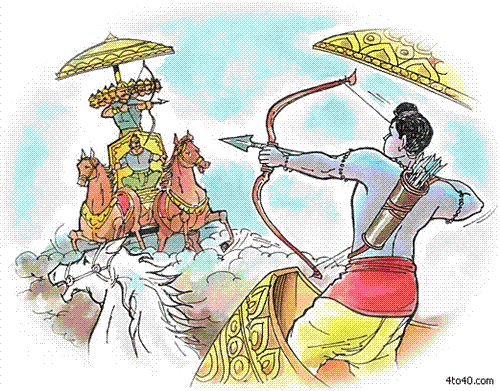
Every year in the months of (September or october ) Ashwini and kartika, Hindus celebrate a 10 day ceremony of fast, rituals, celebrations, fiests to honor the mother Goddess Durga or (Mahishasura mardhini) and triumph of Lord Rama over Demon Ravana. Dussehra also symbolizes the triumph of warrior Goddess Durga over the buffalo demon, Mahishasura. Thus, it is a celebration of victory of good over evil.

This celebration starts from Navratri and ends with the tenth day festival of “Dussehra” or Vijaya dasimi. Navratri and Dussehra is celebrated throughout the country at the same time, with varying rituals, but with great enthusiasm and energy as it marks the end of scorching summer and the start of winter season.

The tenth day after Navratri is called Dussehra, on which number of fairs are organized throughout the northern India and in some places of southern India, burning effigies of Ravana.It is also called “Vijayadashmi” as this day marks the victory of Lord Rama over Ravana. VijayaDashami is considered to be an auspicious day for the Indian householder, on which he worships, protects and preserves 'Shakti' (power). According to Scriptures, by worshipping the 'Shakti' on these nine-days the householders attain the threefold power i.e. physical, mental and spiritual, which helps him to progress in life without any difficulty.


The 'Ramlila' - an enactment of the life of Lord Rama, is held during the nine days preceding Dussehra. On the tenth day (Dussehra or Vijay Dasami), larger than life effigies of Ravana, his son and brother - Meghnadh and Kumbhakarna are set to fire.


In burning the effigies the people are asked to burn the evil within them, and thus follow the path of truth and goodness, bearing in mind the instance of Ravana, who despite all his might and majesty was destroyed for his evil ways.

Dussehra festival

Dussehra is also known as Vijaya Dasami, because of the victory of Ram over Ravana. On this day in Satya Yug, Ram (the eighth incarnation of Lord Vishnu), killed the great demon and king of Lanka, Ravana.

Puranas also opined that in this day warrior Goddess Durga defeated and killed the buffalo demon Mahishasura.

When is Dussehra?

Dussehra is the last day of Navratri; it falls on the 10th day of the waxing moon during the Hindu month of Ashvin (around September or October).
Dussehra in 2009 is on Monday, the 28th of September.

beejakshara mantra Naga Panchami-Festival Importance-Worshipping 5 SNAKES

NAGA PANCHAMI (SNAKE FESTIVAL- NAGA)


Naga Panchami, or the festival of snakes, is observed on the fifth day of the bright lunar fortnight of the Shravana month of the Hindu calendar and is dedicated to the worship of serpents mentioned in the great Hindu Puranas( Sanskrit encyclopedic texts containing cosmogonic histories, legends of gods and heroes, and other traditional material). The five "Naga"s or snakes worshipped on Nag Panchami are Ananta, Vasuki, Taxak, Karkotaka and Pingala.

 Naga Panchami Short Story

It is widely believed that the fifth day of bright half of the Hindu month of Shravana provides special pleasure to divine snakes and this is the reason Naga Panchami is still widely celebrated all across the India. According to one of the mythical stories, once the Naga Loka got blazed due to the maternal curse and this immense pain of Nagas subsided on the day of Naga Panchami. It made this festival so widely known. According to Bhagvata, when the king Janmejaya started performing Naga Yajna to destroy all the snakes, on the day of Naga Panchami, the son of recluse Jaratkaru, Aastik, rescued and saved them. This is one of the reasons of celebrating Naga Panchami. In various places all across India, it is a tradition to make five idols of snakes each with the five heads using gold, silver or the wood pen. The divine snakes are worshiped with milk, Panchamrit and Kheer.

In its true sense, the festival of Naga Panchami inspires us to protect snakes. Every creature has its unique importance in preservation of environment and forests, and the snakes are one of the most pivotal creatures in this regard, and they are etched in over faith and tradition.

1. Ananta - (SNAKE GODDESS NAME)


 The thousand-headed AnantaNag or SheshaNag is believed to be the couch of Lord Vishnu. It is said that the Lord reclines on Shesh Nag to relax between the time of the dissolution of one Universe and creation of another. This posture of the Lord over the snake Ananta is called AnanthaSayana. The serpent's thousand heads rise as a canopy over the recumbent deity and is also said to hold up the earth. Known as Ananta(the endless), Shesh Nag is held to be the symbol of Eternity. During Nagpanchami, women worship Ananta ( thousand-headed Ananta is Vishnu's couch ) the cosmic snake in temples.

2. Vasuki -  (SNAKE GODDESS NAME)


Vasuki is described as a great King of the nagas(snakes) who has a magnificient gem (Nagamani) on his head. Interestingly, Vasuki is mentioned not only in Hindu mythology but also in the Buddhist, Chinese and Japanese mythology. In Bengal, a custom of worshipping the female snake-deity Manasa still prevails and scriptures mention her to be the sister of Vasuki. The most prominent legend in Hinduism concerning Vasuki is the famous incident of Samudra manthan, the churning the ocean of milk. The snake king allowed the devas (gods) and the asuras (demons) to use him as the churning rope while they looked for the ambrosia of immortality. In Buddhist mythology, Vasuki and the other Naga Kings are seen to be amongst the audiences of many of the sermons of Lord Buddha. As the king of the snakes, their duty is seen to be leading their kinsmen in the protection, worship and honoring of the Buddha amongst the snakes and also to see that other enlightened beings are protected when in danger.

3. Takshak -  (SNAKE GODDESS NAME)


The Hindu scriptures describe Takshak as one of the powerful ruler of the snakes who killed king Parikshit, the descendant of Pandavas. According to legend, king Parikshit once insulted a great sage while he was engrossed in meditation and was cursed by the latter that he will die of a snake bite. To avoid the fulfillment of this curse, Parikshit built his palace on a single pillar surrounded by water with the belief that no snake could reach him crawling through the water. Then Takshak took up the challenge to honour the sage's words. He shrunk his body and hid in an apple. Just as Parikshit was about to eat the apple, he sprang out of it to regain his original shape and bit the king. In indignation, the king's son, Janamejay, kindled a huge sacrificial fire and upon his order the royal priests chanted powerful mantras(sacred utterance) which made all snakes fall into the fire. It was only on the intervention of the wise sage Astik that Takshak and the surviving snakes escaped the mass annihilation and the sacrifice was stopped.

4. Karkotaka - (SNAKE GODDESS NAME)


Described as a Nagavanshi king, Karkotaka was the divine ruler of the snakes who had deceived Narada and was cursed as a result. Because of this, Karkotaka could not move a step. When he got trapped in a fire one day and was about to be burnt, King Nal saved him. In gratitude, Karkotaka helped Nal to disguise himself so that he could win back his kingdom and reunite with his wife, Damayanti.

5. Pingala snake -  (SNAKE GODDESS NAME)


Pingala is one of the names of the chief Nagas from the Adi Parvan. His name is related to the story of the "Four Great Treasures" mentioned in Indian as well as Buddhist literature. The "Mahavastu" mentions that the four great treasures are Sankha at Benares, Paduma at Mithila, Pingala in Kalinga and Elapatra at Taxila. Pingala is believed to be the guardian of the treasure hidden at Kalinga.


Gsv Pics |Gsv Vids | Techno zip| Divine Thought | For The Sake of Us | Gsv Films

beejakshara mantra Meaning of Ganesh Chaturthi & Celebration Purpose

Ganesh Chaturti, or Vinayakar Chaturthi, popularly known as Ganapati Festival is the birthday of Lord Ganesha. Ganesh Utsav falls on the fourth day of waxing phase of moon (Shukla Paksha) in the Hindu month of Bhadrapad (August-September). This is the popular reason why we celebrate Ganesh Chaturthi and there is also a deeper meaning.

The Supreme Being that the Hindus worship is formless. ‘That’ is present in all living and non-living. The entire energy source arises in ‘That.’ Unfortunately, it is impossible to imagine That or even give a proper definition to it. The Supreme Truth, or Brahman, can only be realized.

Self realization is not that easy and for it one needs tons of patience, devotion, courage and determination. But sadly this is not possible for majority of the human minds that are controlled by the senses. Therefore the Supreme Truth takes a form and arrives among us. And this form is of Lord Ganesha – when you meditate on Him you can listen and see the primordial sound ‘OM.’ The very first spark or energy that is responsible for all that is Here.

His arrival amidst us is observed as Ganesh Chaturti or Vinayakar Chaturthi. He arrives to teach us equality and peaceful coexistence and above all coexistence of human beings with Mother Nature.

After satisfying us by staying amidst us, Ganesha returns to his formless nature.

Ganesha resides in all animate and inanimate. When we realize this all problems are solved. When we realize that everything is Ganesh all jealously vanishes, ego drops, all anger subsides and you only seeing Ganesha everywhere.

Tuesday, 19 November 2013

beejakshara mantra POWERFUL Goddess-JAGANMATHA-WALLPAPERS

 DUSSHARA FESTIVAL -DURGA VIJAYADASHAMI FESTIVAL WALLPAPER

  • Durga Suktam
  • Maha Lakshmi Ashtakam
  • Sree Lakshmi Ashtottara Satanaama Stotram
  • Sree Lalita Sahasra Nama Stotram
  • Kanaka Dhaaraa Stotram
  • Sree Maha Lakshmi Ashtottara Sata Naamaavali
  • Soundarya Lahari
  • Sree Mahishaasura Mardini Stotram
  • Sree Annapurna Stotram
  • Uma Maheswara Stotram
  • Ardha Naareeswara Ashtakam
  • Lalita Pancha Ratnam
  • Sri Durga Ashtottara Sata Nama
  • Ashta Lakshmi
 The above suktam will be available soon

 DURGA MAA ON TIGER


 SARASWATHI DEVI -WALLPAPER

 VAISHNO DEVI TEMPLE AT JAMMU

Monday, 18 November 2013

beejakshara mantra Celebrate The Ganesh Chathurthi With JOY-2012

Ganesh is also known by the names Ganapati, Ekadanta, Vinayaka, Pillaiyar and Heramba. Irrespective of what Hindu tradition, he is still one of the most popular deities for worship.

Ganesh is depicted with an elephant's head on a human body and in the Hindu tradition he is the son of Lord Siva and the Goddess Parvati. He is known as the Remover of Obstacles and is prayed to particularly when people are beginning a new enterprise or starting a new business. Ganesh is also known as the patron god of travelling.


In places such as Andhra Pradesh and Maharashtra (in India), the festival is celebrated for ten days and is a joyous event and regarded as a public occasion. In other places it is simply celebrated at home and hymns are sung and offerings made to Ganesh. Sweets are also distributed because in Hindu legend Ganesh liked them.
On the day of the festival, it is placed on raised platforms in homes or in elaborately decorated outdoor tents for people to view and pay their homage. The priest, usually clad in red silk dhoti and shawl, then invokes life into the idol amidst the chanting of mantras. This ritual is called 'pranapratishhtha'. After this the 'shhodashopachara' (16 ways of paying tribute) follows. Coconut, jaggery, 21 'modakas' (rice flour preparation), 21 'durva' (trefoil) blades and red flowers are offered. The idol is anointed with red unguent or sandal paste (rakta chandan). Throughout the ceremony, Vedic hymns from the Rig Veda and Ganapati Atharva Shirsha Upanishad, and Ganesha stotra from the Narada Purana are chanted.

For 10 days, from Bhadrapad Shudh Chaturthi to the Ananta Chaturdashi, Ganesha is worshipped. On the 11th day, the image is taken through the streets in a procession accompanied with dancing, singing, to be immersed in a river or the sea symbolizing a ritual see-off of the Lord in his journey towards his abode in Kailash while taking away with him the misfortunes of all man. All join in this final procession shouting "Ganapathi Bappa Morya, Purchya Varshi Laukariya" (O father Ganesha, come again early next year). After the final offering of coconuts, flowers and camphor is made, people carry the idol to the river to immerse it.

The whole community comes to worship Ganesha in beautifully done tents. These also serve as the venue for free medical checkup, blood donation camps, charity for the poor, dramatic performances, films, devotional songs, etc. during the days of the festival.

For More Details of Lord Ganesha- Devotional Songs, Prayers, Wallpapers, Videos Download here..


Gsv Pics |Gsv Vids | Techno zip| Divine Thought | For The Sake of Us | Gsv Films

Sunday, 17 November 2013

beejakshara mantra Lord Sri Krishnas Best Friend Sudhama-Short Story

 When Sudhama came to the palace gates, the guards would not allow him to go inside. Kuchela requested and pleaded with the guards. He wanted to see Lord Sri Krishna, but the guards refused to let him in.

Sudhama name was also called Kuchela. Lord Krishna grew up and became the king of Dwaraka. Kuchela was poor. His family was very big. He had a wife and many children. They did not get enough food to eat. Kuchela’s wife asked him to go and meet your friend Krishna.

`Lord Krishna is king, rich and noble. He will help you by the giving money, then we have some food.’’. She said. Kuchela agreed to go there and meat to him. Giving a handful of rice flakes to Kuchela, his wife said. `this is all that I have in the house given this to lord Krishna when you see him. You should not go empty-handed when you go to see your friend’’. Sudhama took the rice flakes and put them in a knot of dirty cloth.

Kuchela went to Dwaraka. It was a grand and beautiful capital city. Kuchela looked newly and he wondered. People are seeing his walking. And they laughed and made fun of him.

When he came to the palace gates, the guards would not allow him to go inside. Kuchela request and pleaded with the guards. He wanted to see Lord Sri Krishna, but the guards refused to let him in.

Lord Krishna saw him at the gates.

He was very happy to see his childhood friend, and rushed out and hugged Kuchela. He took him inside the palace.

` You are dearest friend, what you have brought for me’’.

Kuchela was ashamed of the dirty little knot of rice flakes. He tried to hide it. But Sri Krishna saw it and too it. ``rice flakes! I love them!’’.Said Sri Krishna he ate mouthfuls of the rice flakes.

As soon as Sri Krishna had eaten the first mouthful, kuchela’s hut turned into a grand house. When he ate the second mouthful, kuchela’s wife and got wonderful clothes to wear and plenty of food to eat.

Kuchela did know all this. He spent a few happy days with Sri Krishna. At last it was time for him to go home. He did not feel like asking his old friend for any help. He left the palace empty handed.

He made his way home sadly. He did not know how to tell his wife that he had got nothing. When he came home, he did not see his old broken hut, but a grand house instead. His wife and children came running with happy to greet him. They were well dressed. Kuchela was overjoyed. His old friend Krishna had showered his blessings on him!

Moral of the Story  :
  1. Give Respect to  Friends, 
  2. Accept the Gifts with due Respects. 
  3. Honour the Guest.

Gsv Pics |Gsv Vids | Techno zip| Divine Thought | For The Sake of Us | Gsv Films

beejakshara mantra HAPPY DIWALI - CAREFUL WITH CRACKERS


This is the festival of Sri lakshmi, which gives us prosperity in our life and makes our brain sharper to think Good and do good for the people. A great funny day in everyones life..
For all the visitors of Divine -Thought we wish you a very great and delightful Diwali........................
The most colorful and bright lights festival of hindus is " DIWALI".  On this Diwali . I wanted to wish you all for a year filled with prosperity health and lots of FUN!!!
 H A P P Y    D I W A L I


  •  All files are for promotional Purpose only.
  •  Delete from your PC after you listen.
  •  Buy Originals..


beejakshara mantra DASARA- 9 Days Festival - 9 Powerful Goddesses

Most of us know the Importance of each and evey Goddess. But  most of us don't know when to pray the 9 Powerful Goddess on their respective - NAVARATRI DAY  Dasara- .
Just Read the article and share it to your friends . Greet them with this article...


During the Navaratri festival, nine forms of Goddess Shakti is worshipped all over India. Goddess Shakti is worshipped depending on the tradition of the region.

1) Goddess Durga – Also known as Maa Durga is an embodiment of creative feminine force and is regarded as "the invincible" one.

2) Goddess Bhadrakali – Goddess Bhadra Kali is one of the most popular forms of the Goddess Shakti as mentioned in Devi Mahatmyam. Goddess Bhadrakali is the popular form of Devi worshipped in Kerala.

3) Goddess Amba - Also known as Jagadamba is another form of Goddess Shakti and is regarded as the Mother of the universe

4) Goddess Annapurna – Also known as Annapoorna is an avatar of the Divine Mother and is the Goddess of Harvests. Anna literally means food and grains and “Purna” means complete or full. Hence Goddess Annapurna is the one who bestows food in plenty.

5) Goddess Sarvamangala – Another form of Goddess Shakthi. As Sarvamangala, Devi bestows joy (mangal) to everything (sarva).

6) Goddess Bhairavi – Bhairavi is a fierce form of the Goddess. Devi took this avatar when she became the consort of the Bhairava.

7) Goddess Chandika – Also known as Chandi or Durga Sapthashati Chandika is the supreme Goddess of Devi Mahatmya. Goddess Chandi is described as the Supreme reality, who is a combination of Maha Lakshmi, Mahakali, and Maha Saraswati.

8) Goddess Lalita – Also known as Shodashi, Rajarajeshvari, or Tripura Sundari, Goddess Lalitha is one of the group of Ten Goddesses of Hindu belief, collectively called mahavidyas.

9) Goddess Bhavani - Bhavani literally means "giver of life" is a ferocious form of the Goddess Parvati Devi.

10) Goddess Mookambika - On the 10th day of Navaratri Festival, Goddess Shakti is worshipped as Mookambika Devi. Goddess Mookambika is regarded as a manifestation of Goddess Shakti, Goddess Saraswathi and Goddess Mahalakshmi. Kollur Mookambika Devi Temple, situated at the bottom of the Kodachadri peak, is one of the most prominent shrines dedicated to Goddess Mookambika. 

Once again We wish you and your family a Very Happy Dasara  

Gsv Pics |Gsv Vids | Techno zip| Divine Thought | For The Sake of Us | Gsv Films

Saturday, 16 November 2013

beejakshara mantra Importance and meaning of Vaikunta Ekadasi

Significance of Vaikunta Ekadasi or Mukkoti Ekadasi.

Vaikunta

Vaikunta is the name of Lord SriManNarayana. It is the place where Lord Sri Maha Vishnu resides along with his Consort Goddess Sri Maha Lakshmi resting on Aadisesha. It is known as Parama Padam, the supreme abode and the most coveted place. It is the sacred abode where every soul would be longing to go and stay eternally. The nearest reference to Vaikunta, we find in Vishnu Sahasranama sloka # 44 which reads as follows.

! Vaikuntah Purushah Praanah Praanadah Pranavah Prithuh
Hiranyagarbhah Shatrughno Vyaapto VaayurAdhokshajah!!

Meaning

Lord Maha Vishnu also known as Vaikunta is the remover of obstacles and sins and Vaikunta is the place which removes obstacles. He is the one who has united all the Pancha Bhoothas and made them to co-exist with each other. He is the Purifier and the one who gives in plenty. He is the primordial person who existed before anything else, and the one who is the cause of the origin and end of the world! He is one who outshines everyone. He burns away all the sins of his devotees.

He is life giver and is the vital air that gives or sustains life. He is the prana (life) to every one including Devathas. He is the one who makes others bow before Him and the one who deserves to be adored. He is the one who expands himself as Cosmos. He is as pure as Gold. He is the one who delights every one’s heart.

He is the slayer of enemies (Arishadvargas) of people and also destroyer of enemies of Gods. He is the one who is full of benevolence, love and affection without any discrimination. He is the one who is omnipresent and there is no single place where he does not exist. He is the one who manifests himself, never gets diminished and is the all pervasive Supreme God.

Ekadasi

As per Padma Purana, Ekadasi is depicted as the female energy of Maha Vishnu who in the form of a damsel kills the demon Mura and protects the Indradi Devathas on this day. Pleased by the act of his Female energy He names her as Ekadasi. Thus, Ekadasi thithi became the dearest to Lord Sri Maha Vishnu. He also gave her a boon that, whoever worships Ekadasi and observes fasting on this day would reach Vaikunta (His abode) and his doors will be open for such people. From time immemorial, it is the Northern Gate known as Paramapada or Vaikunta Dwara that is kept open for a single day and that day is known as Vaikunta Ekadasi Day. It is also called as Mukkoti Ekadasi.

The combination of Uttara Dwara darshanam of Lord Vaikunta plus Ekadasi thithi has attained significance as Vaikunta Ekadasi. It is said that on this day all the Brahmaadi Devathas ( 3 crore Gods and Godesses) visit Sri Vaikuntam to have Uttara Dwara darshanam of Lord SriManNarayana. It is befitting and considered to be the most auspicious day to worship Lord Sri ManNarayana along with Goddess Sri Maha Lakshmi and also to have Uttara Dwara darshana of the Lord on this day. Special celebrations are held at Tirumala, Sri Rangam, Bhadrachalam etc… where thousands of devotees visit these temples to have the Uttara Dwara darshanam of the Lord.

  • Note:- 
  • All files are for promotional Purpose only.
  •  Making CD's and selling them is illegal.
  •  Files are NOT hosting by this domain.
  •  Comments should be in ENGLISH only without any  "illegal Web links "

Friday, 15 November 2013

beejakshara mantra Ugadi - Telugu New Year Day -Festival Importance

Festivals are celebrated every year in the remembrance of past events. All the major Hindu festivals have their own purpose and significance, i.e., to show their relevance and importance in the context of the eternal world cycle of history. India's rich heritage with its numerous festivals celebrated throughout the year, provides succor and faith, as each occasion has its own distinct value, beauty and ritual practice. Amongst the numerous festivals of India, Ugadi is celebrated with festive fervor in Maharashtra, Karnataka and Andhra Pradesh. While it is called Ugadi in A.P. and Karnataka, in Maharashtra it is known as Gudipadava".

Hindus have always given pride of place to festivals, as it is a time for getting together as families. The occasion can be based on a seasonal change, a social or religious theme. The New year festival or Ugadi comes close on the heels of Holi. While the strong colors of Holi start fading away. Holy is the purification of the soul by imbibing Godly knowledge, inculcating the divine virtues. The aim is to replace the vices with Virtues. Symbolically, it signifies thanks giving to celebrate bounteous crops as well as signaling the end of an old era and the beginning of a new era.

Ugadi name has been changed from Yuga Aadi (Yuga + Aadi means "Beginning of New age"). The ages starting from a major reference point are Golden age, Silver age, Copper age and Iron age and also known in Hindi as Satyuga or Krutha yuga, Treta yuga, Dwapar yuga and Kaliyuga. The very end of Iron age i.e. the Kaliyuga is refer to hell or "Naraka" or the age of ignorance, which our Puranas or even in Srimath Bhagavath Gita mentioned that the Kaliyuga is "the night of the Brahma, the creator of new world and the Satyuga is the Day of Brahma".

It is believed that the creator of the Hindu pantheon Lord Brahma started creation on this day - Chaitra suddha padhyami or the Ugadi day. Also the great Indian Mathematician Bhaskaracharya's calculations proclaimed the Ugadi day from the sunrise on as the beginning of the new year, new month and new day. The onset of spring also marks a beginning of new life with plants (barren until now) acquiring new life, shoots and leaves. Spring is considered the first season of the year hence also heralding a new year and a new beginning. The vibrancy of life and verdant fields and meadows full of colorful blossoms signifies growth, prosperity and well-being.

It is believed that the Ugadi (Beginning of the yuga - Satyuga) will be the next age of the Eternal World Drama Cycle, i.e. after the Kaliyuga. The eternal world drama cycle repeats every 5000 years with 1250 years for each yuga as per the teachings of Prajapita Brahma kumaris Ishwariya Vishwa Vidyalaya. It is the wonderful and colourful festival, because after the Holi (the purification of the soul by imbibing Godly knowledge, inculcating the divine virtues by replacing the vices with virtues) the New age, New yuga, and New era will be start. So, it is the time to change ourselves or to purify ourselves by inculcating the divine virtues.

Ugadi marks the beginning of a new Hindu lunar calendar with a change in the moon's orbit. It is a day when mantras are chanted and predictions made for the new year. Traditionally, the panchanga shravanam or listening to the yearly calendar was done at the temples. Preparations for the festival begin a week ahead. Houses are given a thorough wash. Shopping for new clothes and buying other items that go with the requirements of the festival are done with a lot of excitement. It is said in Srimath Bhagavath Gita that the Body is the Cloth for the Soul, the eternal being, which takes many birth in the cyclic world drama (four yugas). When the eternal, imperishable soul takes new birth, i.e., takes new body as a kid, it is said that the soul wears a new cloth. Let us celebrate the Ugadi as a beginning of New age - Satyuga- of the world cycle.

On Ugadi day, people wake up before the break of dawn and take a head bath after which they decorate the entrance of their houses with fresh mango leaves. The significance of tying mango leaves relates to a legend. It is said that Kartik (or Subramanya or Kumara Swamy) and Ganesha, the two sons of Lord Siva and Parvathi were very fond of mangoes. As the legend goes Kartik exhorted people to tie green mango leaves to the doorway signifying a good crop and general well-being. In Spiritual terms it is said that the Lord Shiva, the Supreme Soul refer to the "Trimurthi Shiva" and also believed "Paramatma Shiva", the one who is the Supreme Lord of even for Brahma, Vishnu, Shankar (Trimurthi) and all other deities. As the Spiritual Father of all souls, we are the one who have right to get Peace, Prosperity, Health, Wealth and Happiness through the festival of Ugadi by changing ourselves or replacing the vices with divine virtues with the help of Spiritual or Godly knowledge.

It is noteworthy that we use mango leaves and coconuts (as in a Kalasam, to initiate any pooja) only on auspicious occasions to propitiate gods. People also splash fresh cow dung water on the ground in front of their house and draw colorful floral designs. This is a common sight in every household. People perform the ritualistic worship to God, invoking his blessings before they start off with the new year. They pray for their health, wealth and prosperity and success in business too.

Ugadi is also the most auspicious time to start new ventures. And they will take jaggery and Neem leaves also today because Jaggery represents joy and happiness and Neem leaves represents sorrow. So those souls who come in the entire cycle of World drama can celebrate Ugadi, because Jaggery represents Krutayuga and Tretayuga which is full of purity, prosperity and peace. Neem leaves represents Dwaparyuga and Kaliyuga which consists of sorrow, chaos and impurity.

beejakshara mantra Happy Dasara - Know the Importance of the Festival

Happy Dasara - Happy vijayadashimi - Festival importance.
In the months of Ashwin and kartik, Hindus observe a 10 day ceremony of fast, rituals, celebrations, fiests to honor the mother Goddess and triumph of Lord Rama over Demon Ravana. Dussehra also symbolizes the triumph of warrior Goddess Durga over the buffalo demon, Mahishasura. Thus, it is a celebration of victory of good over evil.


This celebration starts from Navratri and ends with the tenth day festival of “Dussehra”. Navratri and Dussehra is celebrated throughout the country at the same time, with varying rituals, but with great enthusiasm and energy as it marks the end of scorching summer and the start of winter season.


The tenth day after Navratri is called Dussehra, on which number of fairs are organized throughout the northern India, burning effigies of Ravana.It is also called “Vijayadashmi” as this day marks the victory of Lord Rama over Ravana. VijayaDashami is considered to be an auspicious day for the Indian householder, on which he worships, protects and preserves 'Shakti' (power). According to Scriptures, by worshipping the 'Shakti' on these nine-days the householders attain the threefold power i.e. physical, mental and spiritual, which helps him to progress in life without any difficulty.


The 'Ramlila' - an enactment of the life of Lord Rama, is held during the nine days preceding Dussehra. On the tenth day (Dussehra or Vijay Dasami), larger than life effigies of Ravana, his son and brother - Meghnadh and Kumbhakarna are set to fire.


The theatrical enactment of this dramatic encounter is held throughout the country in which every section of people participates enthusiastically.


In burning the effigies the people are asked to burn the evil within them, and thus follow the path of truth and goodness, bearing in mind the instance of Ravana, who despite all his might and majesty was destroyed for his evil ways.


Legends


Dussehra is also known as Vijaya Dasami, because of the victory of Ram over Ravana. On this day in Satya Yug, Ram (the eighth incarnation of Lord Vishnu), killed the great demon and king of Lanka, Ravana.


Puranas also opined that in this day warrior Goddess Durga defeated and killed the buffalo demon Mahishasura.


When is Dussehra?


Dussehra is the last day of Navratri; it falls on the 10th day of the waxing moon during the Hindu month of Ashvin (around September or October).

Dussehra in 2009 is on 17 th of October.
  • Note:- 
  • All files are for promotional Purpose only.
  •  Making CD's and selling them is illegal.
  •  Files are NOT hosting by this domain.
  •  Comments should be in ENGLISH only without any  "illegal Web links "

Thursday, 14 November 2013

beejakshara mantra Kubera Matram -Akshya trutiya - buy gold

Kubera or Kuvera festival or Akshaya tritiya falls on the third lunar day from Amavayasya(new moon) which occurs during the suklapaksha month of vaishaka.The special fasts and feasts of the vaisaka month begins with Akshaya Tritiya. The reason for this day to be auspicious is the position of Sun and Moon on that particular day. Every year, Akshaya tritiya falls between April 14th and May 16th.During the period, Sun will be in Aries which is in exalted position and Moon in Taurus which is also in exalted position.This year akshaya tritiya falls on 16th May 2010.

Kubera or kuvera is the God of Wealth. The puja can be performed by anyone - even the very poor - as the materials required for Lakshmi-Kubera puja can be secured at practically no cost. Sincerity and Godliness (keeping heart and soul in peace and harmony) is most important material for this ritual..

Download and Share-  Kanakadhara Stotram
Take print and Send at least 10 of your friends.
Chant everyday to clear all your debts. 
Buy Gold or Buy any wealthy items, which gives you good returns on that particular day. This will boost your earnings Read and learn kubera mantra in this blog.. 

happy wealthy day... 

Wednesday, 13 November 2013

beejakshara mantra SanKranthi -PonGal-Festival Importance

Harvesting Festival of india, is called as Sankranthi in Andhra pradesh and Karnataka and Pongal in Tamilnadu. Sankranthi is the important festival of South India which is celebrated for 3 days. Sankranthi festival is celebrated all over South India in the month of January, the Thai month of the Tamil Year. This festival is celebrated to welcome the spring season on the occasion of the 'ascent' of the sun to the north and to pay tribute to the Sun, Nature and cattle for helping them with a rich harvest. This festival marks the coming of the spring season. This festival is celebrated for 3 days with great pomp and splendour.


The first day is celebrated as Bhogi Pongal or the family festival. This day is dedicated to Lord Indra who is the head of all Five Elements and the Goddess of Lakshmi.
 
Sankranthi Festival Celebrations First Day : (Bhogi Day)On this Sankranthi or PonGal day, the people paint and decorate their homes and remove the old items from the house and set to fire (Bhogi ManTalu). The doorways are painted with vermilion and sandalwood paste with the colourful garlands of leaves and flowers. The boys of the village beat the little drums known as Bhogi Kottu in Tamilnadu. Girls and Boys who are below the age of 5 years are showered with Fruits and Coins and perform Harathi in the evenings which is called as Bhogi Pallu in Andhra pradesh. On that day Haridas (country singer) comes to every home to take new grains. As this is a colourful day, Each and every homes are beautifully designed with holy powder (MuGGu PinDi) and cow dung. Those designs were filled with Vibrant colors.
 
Second Day : (Sankranthi Day)The second day is celebrated as Surya Pongal, the main festival. This day is dedicated to Lord Surya (Sun). Sugarcane, pongal and festoons of mango leaves mark the auspicious day. The women prepare the Pongal, rice cooked in milk and jaggery and offer it to sun.  

Third Day : (Kanuma Day)The friends also greet one another by asking whether rice is boiled. Mattu Pongal is celebrated as the third day. On this day, the people pay tribute to the cattle for bringing in the prosperity. The cattle are bathed, decorated and their horns are painted in bright colours. Mattu Pongal is also known as the Kanuma Pongal, and on this day, the women pray for the welfare of their brothers. The main feature of the Pongal festival is the Jallikattu or Taming of the bull celebrated in Tamilnadu. Jallikattu is the most popular sport in Tamil Nadu. This game of bravery is held in the villages with great pomp and splendour. The people from the neighboring villages gather in the open grounds to watch the man and beast putting the strength against each other.

LinkWithin

Related Posts Plugin for WordPress, Blogger...